The World Without Electricity
 The French version of this article was:
- republished (in abridged form) in THE HUFFINGTON POST on 19.10.14
- referenced on 28.10.14 by the official website of the City of Geneva
Have you ever tried to imagine today’s world without electricity? Personally, I think about it quite often whenever I sit down to write a new article—if you know what I mean. But don’t expect a grim tale with an apocalyptic vibe, even if that’s partially what could happen if our modern system lost electricity. What I propose here is a reflection on our way of life, which is 99% dependent on electricity.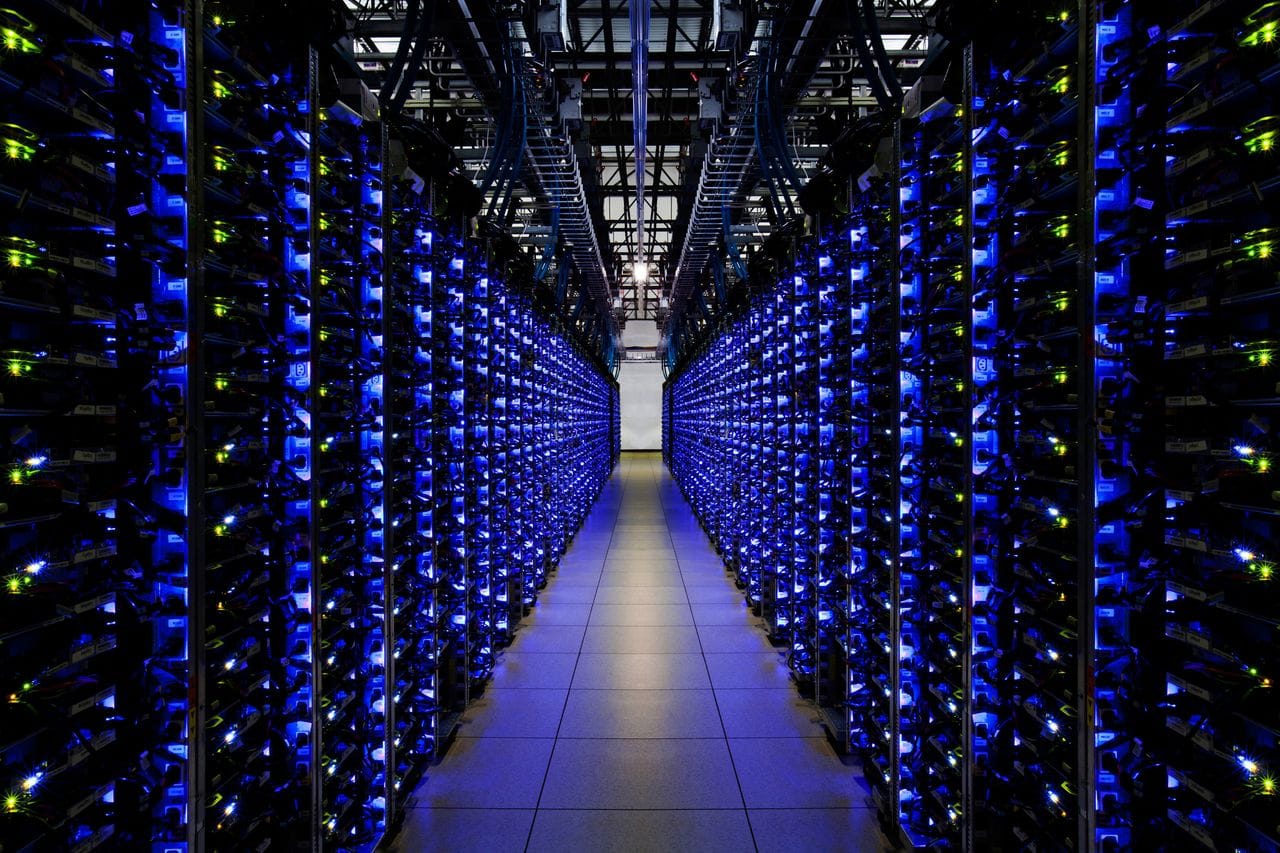
An Anecdotal but Not Unrealistic Projection
Let’s imagine a scenario—not at all impossible—where one day (maybe tomorrow), for some X reason (it could be anything), the Earth is left without electricity. And not just for two days or a week, as might happen to a town or region after a storm or technical collapse, but for an indefinite period—globally.
What would that mean? Well, that absolutely everything stops.
When you think about it, you quickly realize we’re even more dependent on electricity than on oil. Combustion engines are already being replaced by electric ones. A big win for urban lungs and ears. Engineers are already working on electric airplanes, although science still hasn’t figured out how to lift 150+ tons 10,000 meters in the air using just batteries. And shipping multi-thousand-ton vessels across oceans with electric motors and solar panels still seems somewhat complex. But being realistic and pragmatic by nature, I believe it’s only a matter of time—science will eventually solve what seems impossible today.
We Can Live Without Oil
But is there any domain or aspect of life as we know it today—especially for younger generations—that wouldn’t be affected or at least partially reliant on electricity?
Everything runs on electricity. Starting with what you’re reading right now. It wouldn’t be possible without “the movement of charged particles.” Sure, I could handwrite this article and share it with family or maybe neighbors. But only one person at a time. The fact that this article can be read in Alaska, Australia, Easter Island, Russia, and South Africa simultaneously and instantly after publication? That’s unthinkable without electricity.
We cook with it, wash dishes and clothes with it. We communicate, start cars, print, photocopy, and brew coffee with it. We light, heat, heal, and manufacture everything with it.

My point is simple: if X happens—say, a massive solar flare—it would take 48 hours for humanity to return to the Stone Age. And all our globalization with it. LOL!
Well, not LOL at all, really—no TV, no radio, no internet, no phones. No communication at all. No stocked and refrigerated supermarkets. No high-speed trains. No water from the tap.
Even removing just one of these elements from our current system would shake everything. Sure, we could survive without TV or radio—though I know a few people who’d struggle to fill their evenings…
But imagine the disappearance of the internet and, by extension, all networks built on it. How many industries would instantly shut down, paralyzing the rest of the system? No need to draw a picture—conclusion’s obvious: our progressive society, with its human rights and everything else, would devolve into open-air anarchy.
Electricity: A Habit-Forming Drug
Humanity has become so dependent on comfort—which itself depends 99% on electricity—that if suddenly deprived of it, most people (especially in developed countries) would be utterly trapped. No one would know how to make fire barehanded, how to defend themselves without tools, how to preserve food—or produce enough of it to feed 8 billion people. Those 8 billion only exist thanks to the industrial revolution, which is owed as much to electricity as to oil. So humanity, for all its intelligence, might end up more vulnerable than it ever was before mastering electricity.
Looting would also be a danger. We’ve already seen enough examples—New Orleans in 2005, for instance—of a real jungle law setting in once people are removed from their routine system. These not-so-funny scenarios are covered in another of my articles: Let’s Take a Step Back from the Problem.
In this light, debates—especially in France—about phasing out nuclear power should, in my view, begin with a more logical question: how do we reduce overconsumption of electricity? Instead of feeding the insatiable, ever-growing “electric appetite” with economic justifications.
Electricity for All!
Yes, there are more and more new technologies that let devices work without electricity—like fridges cooled by radiative and natural water convection. But let’s be clear: such a fridge today requires 250 liters of water stored in its cooling system. Imagine the size of that thing in your kitchen—and you quickly realize we’re still far from the comfort we’ve grown used to over the past few decades.
 According to the International Energy Agency (IEA), co-led by the World Bank, around 1.2 billion people were still living without electricity in 2013. And here’s a particularly interesting detail—one I can’t leave out (source: Le Figaro, Le Monde):
The UN’s 2011 goal of doubling the share of renewable energy (wind, solar, etc.) by 2030 seems ambitious. In 2010, renewables made up 18% of energy consumption, up from 16.6% twenty years earlier—just a 1.4% increase, according to the report.
The 20 countries that use 80% of the world’s energy—especially the U.S. and China, which alone account for 40%—must “lead the way” and take “decisive action” to reach 36% renewable by 2030, says the World Bank.
Those still living without electricity today are basically in the 19th century (if not the 18th) in every sense: no access to communication, medicine, hygiene, or any of the features of modern life. Yet paradoxically, they’re arguably better adapted to a “natural” life—and therefore better equipped to survive an “electrical catastrophe” that would be terrifying for the Western way of life.